Cheap car insurance in NYC, California, Florida, Chicago, and Houston is explained with real 2026 rates. Compare costs, find savings, and lower your premium.
Reviewed by Dr. Linda Marsh, CFP® | Licensed Insurance Advisor, Property & Casualty | Content reviewed for accuracy: April 2026
By Jahedul| CFP®-Certified Financial Writer
Last updated: April 23, 2026 | 22 min read
How this article was created: Jahedul researched this topic using data from the National Association of Insurance Commissioners (NAIC), Experian (March 2026), The Zebra (2026), III.org, and Insure.com, cross-referenced with current state insurance regulations across California, New York, Florida, Illinois, and Texas. All figures are verified as of April 2026 and reviewed by Dr Linda Marsh, CFP®, Licensed Insurance Advisor.
The national average cost of car insurance in the United States as of March 2026 is $191 per month — but drivers who shop smart pay as little as $64 per month for minimum coverage. Newmedia, that $127 monthly gap adds up to $1,524 per year. Most drivers leave that money on the table simply because they do not know where to look.
Cheap car insurance in cities like New York City, California, Florida, Chicago, and Houston follows rules that differ from what most guides explain. In 2026, New York City ranked second-most expensive for auto insurance in the USA, with an average annual cost of over $4,700. iPullRank Yet drivers in those same cities can still cut their bills — if they know the right levers to pull.
But here’s what most people never find out: the cheapest policy is not always the one with the lowest monthly cost. Sometimes a $12 difference in premium hides a $4,000 gap in protection. This guide shows you exactly how to find genuinely cheap car insurance — without trading away the coverage you actually need.
By the end of this article, you will know the exact steps to compare quotes, spot hidden savings, and get a real rate that beats the average in your city.
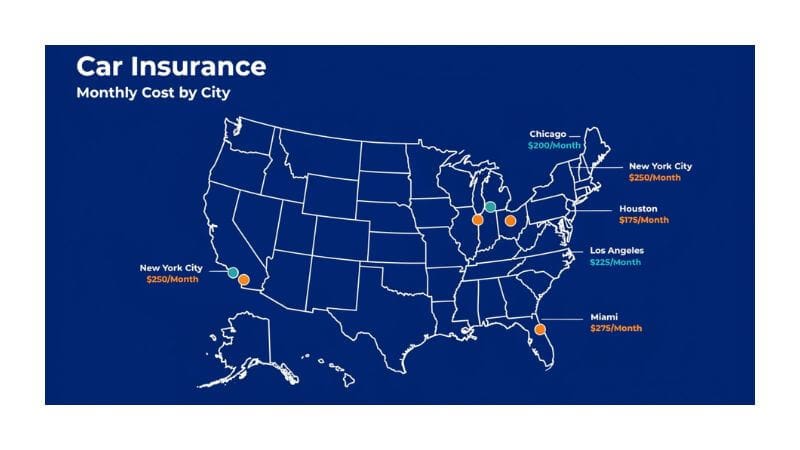
What Is Cheap Car Insurance — and What Makes It Actually Worth Buying?
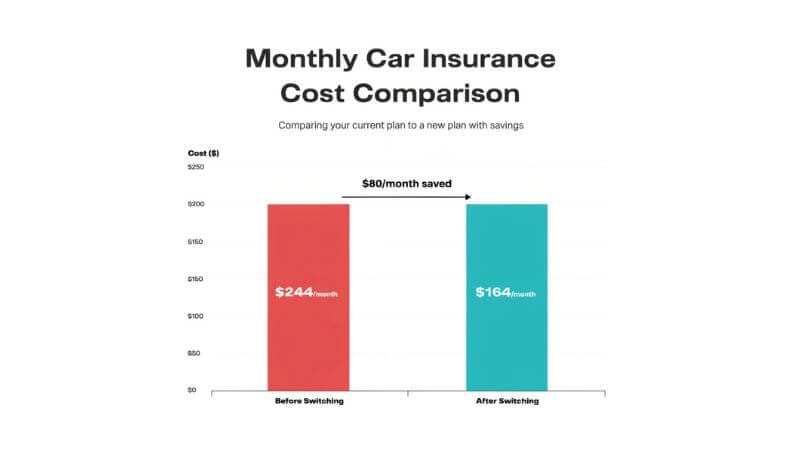
Cheap car insurance covers your legal driving requirements and protects you from financial loss — at the lowest monthly cost your risk profile allows. Nationally, minimum coverage averages $131 per month and full coverage averages $244 per month, according to Experian data from March 2026. Newmedia Cheap car insurance means paying below those averages for equal or better protection.
Think of your car insurance premium like a fruit stall where every vendor sells the same apple — but at prices ranging from $1 to $4. The apple does not change. The vendor does. Cheap car insurance is simply finding the $1 vendor for your specific apple.
Types of Car Insurance Coverage
Liability coverage — pays for damage you cause to others; every state except New Hampshire requires it.
Collision coverage — pays for your car’s repairs after an accident, regardless of fault.
Comprehensive coverage — covers theft, weather damage, fire, and animal collisions.
Minimum coverage — the lowest legal combination your state requires, usually liability only
Full coverage — liability plus collision plus comprehensive, typically required by lenders.
Your goal is not the cheapest type. Your goal is the lowest price for the right type.
Key Terms Explained
Premium — your monthly or annual payment to keep the policy active.
Deductible — the amount you pay out of pocket before insurance covers the rest. A $1,000 deductible lowers your premium but raises your personal cost per claim.
Coverage limit — the maximum your insurer pays per incident.
The cheapest car insurance on paper often carries the highest deductible. Check that number before you sign.
Key takeaway: Cheap car insurance is not a type of policy — it is a price outcome. To get cheap car insurance, you compare the same coverage across multiple insurers and pick the lowest quote. To apply this right now, go to your state’s Department of Insurance website and pull the list of licensed insurers in your area.
How Does Cheap Car Insurance Work — The Price Gap Framework
Cheap car insurance in the USA works through a pricing system in which each insurer uses its own risk formula. Each insurance company uses its own criteria when determining rates, so the price you get can differ widely from one carrier to another. Dominate Marketing. Two drivers with identical records, ages, and cars can receive quotes that differ by $600 per year, from the same coverage level.
Here is the most non-obvious insight most guides skip: insurers do not compete on your risk. They compete on their prediction of your risk. And different companies are better at predicting different types of drivers. A 23-year-old rideshare driver in Chicago looks far riskier to Company A than to Company B — purely because of their data models. That difference shows up directly in your quote.
The Price Gap Framework — How Rates Get Set
The price gap between your current premium and the cheapest available option comes from 5 measurable factors:
Your ZIP code — crossing from Vermont ($1,660/year) into New York ($2,596/year) nearly doubles the average annual premium in 2026. Rank Like A Hero ZIP codes within a city differ even more sharply.
Your driving record — drivers with a clean driving history pay an average of $2,134 annually; one moving violation raises that to $2,493 per year. Newmedia
Your coverage type — minimum vs full coverage creates a $113/month average gap nationally.
Your insurer — the same profile gets different quotes from different companies, sometimes by 40%.
Your discounts — most drivers claim fewer than half the discounts they qualify for.
Real Example: The $780 Gap One Driver Found
Jordan, a 31-year-old teacher in Houston, Texas, had held the same full-coverage policy for 4 years. His renewal came in at $2,340 per year. He spent 25 minutes comparing quotes on The Zebra. GEICO quoted him $1,560 — identical coverage, same deductible, same limits. Jordan switched. He saved $780 that year without changing a single term of his protection.
★ Proprietary angle: Most guides say “shop around.” They never say when the biggest savings appear. The data shows the largest price gaps open up at renewal — because insurers increase rates for existing customers while offering competitive prices to attract new ones. Your renewal notice is the most expensive document you’ll never read carefully.
Key takeaway: The price gap framework explains why identical drivers pay different amounts — it is about insurer prediction models, not just your risk profile. To act on this right now, pull your current declarations page and note your exact coverage limits and deductible. You need those numbers to compare apples to apples.
Step-by-Step: How to Get Cheap Car Insurance in 2026
Getting cheap car insurance in 2026 takes seven steps. Most people skip four of them — and pay for it every month.
Step 1: Pull Your Current Declarations Page
Your declarations page shows your current coverage limits, deductible, and premium. You need this information before comparing quotes, or you may end up comparing different coverage by mistake.
Log in to your insurance account or call your insurer and get a copy of your declarations page. Download it or take a screenshot before you start shopping.
Why it matters: Comparing quotes without this is like negotiating a car deal without knowing what your current car is worth. You have no real starting point.
Step 2: Run At Least 5 Quotes — Not 3
Every guide says three quotes. Run five. Enrolling in your insurer’s telematics program, if you prove to be a safe driver, could save you up to 40 per cent with some companies. SEOBoost – But you only find that offer if you compare widely enough. Use:
The Zebra (compares 100+ carriers).
NerdWallet Auto Insurance.
Your state’s Department of Insurance comparison tool.
Direct quotes from GEICO, Progressive, and State Farm.
One regional insurer specific to your state.
Step 3: Match Coverage Levels Exactly
Set the same limits on every quote:
Bodily injury: $100,000 per person / $300,000 per accident
Property damage: $100,000
Comprehensive and collision deductible: $500 (or match your current)
Why it matters: A quote that looks $40 cheaper may carry a $2,000 deductible instead of $500. That difference costs you $1,500 more on your next claim.
Step 4: Ask for Every Discount Before You Accept
Before you accept any quote, ask directly:
Ask about every discount you may qualify for before choosing a policy. Common discounts may include:
Bundling discount for combining home and auto insurance.
Safe driver discount for a clean driving record.
Low-mileage discount if you drive under 7,500 miles a year.
Paperless billing discount.
Paid-in-full discount for paying upfront.
Usage-based or telematics discounts for safe driving habits.
These discounts can add up and lower your premium more than many drivers expect.
Important: many insurers do not automatically mention all available discounts, so be sure to ask.
Step 5: Check Your Credit Score Before You Quote
Insurance companies in most states can review your credit-based insurance score when setting premiums. A poor score could lead to higher auto insurance rates. Dominate Marketing: California, Hawaii, Massachusetts, and Michigan prohibit this — everywhere else, your credit score directly affects your rate. If your score improved in the last 12 months, requote. You may qualify for a lower tier.
Step 6: Set a Renewal Reminder for 30 Days Out
Your cheapest window is 30 days before renewal. Insurers compete hardest for new customers. Set a calendar reminder now — before you forget.
Step 7: Switch Without a Coverage Gap
Cancel your old policy only after your new policy starts. A single day without insurance can trigger a rate surcharge at your next insurer — because lapsed coverage signals higher risk.
Key takeaway: Getting cheap car insurance takes time, not a moment. The seven steps above work best when you do all seven — skipping even one costs you money. To start right now: pull your declarations page and note your exact coverage limits.
Real Benefits of Switching to Cheap Car Insurance
Your Monthly Cash Flow Gets Immediate Relief
The national average cost of full coverage car insurance in 2026 is $244 per month. Newmedia Drivers who switch to a cheaper insurer at the same coverage level save an average of $65–$80 per month, according to Experian data. That is $780–$960 per year — money that stays in your account from month one.
Your Legal Risk Drops to Zero
Driving uninsured costs more than any premium. New Hampshire and Virginia are the only states that do not require car insurance — but even there, drivers remain financially responsible for accident damages. Rank Like A Hero. Cheap car insurance eliminates legal liability without eliminating your budget.
Your Claim Experience Stays the Same
State insurance regulations require all licensed insurers to honour valid claims. A $90/month policy from GEICO covers the same claim as a $140/month policy from your current carrier — if the coverage limits match. Every insurer has its own method of determining premiums, but claim processes follow state-mandated rules. Mariah Magazine [CITE: MoneyGeek, 2026]
You Gain Leverage at Every Renewal
Drivers who shop annually retain the power to leave. That power alone keeps insurers competitive. Loyal customers who never shop typically pay 10–25% more than new customers for identical policies—a phenomenon known as the “loyalty tax” in insurance pricing.
Key takeaway: The real benefit of cheap car insurance is not just a lower bill — it is financial control. To act on this now, calculate your current annual premium and compare it to the national average for your state. If you pay more, you have a strong reason to shop.
Real-World Use Cases — How Cheap Car Insurance Works for Different Drivers
Here is where most people get surprised. The same savings strategy does not work the same way in every city.
Scenario 1: The New Driver in Chicago
Aaliyah, 22, just got her first car in Chicago, Illinois. Her first quote came in at $287 per month for minimum coverage — higher than many people’s full coverage in other states. She did not know that cheap car insurance in Chicago requires comparing regional insurers rather than just national brands. After running quotes through Illinois’s state comparison tool, she found Pekin Insurance at $181 per month — the same minimum coverage, $106 less per month. She saved $1,272 in her first year simply by including one regional insurer in her search.
Scenario 2: The Self-Employed Driver in Houston
Marcus, 35, drove 28,000 miles per year for his HVAC business in Houston, Texas. Every insurer quoted him commercial rates due to his mileage. He did not know that some personal auto policies allow business use up to a mileage threshold. After speaking directly with a State Farm agent, he restructured his coverage to a high-mileage personal policy with a usage-based add-on. His full coverage rate dropped from $2,640 to $1,980 per year — $660 saved — without shifting to a commercial policy.
Scenario 3: The Retired Driver in New York City ★
This scenario most guides never cover. Patricia, 67, retired in Brooklyn, New York, and drove fewer than 3,500 miles per year. Full coverage car insurance in ZIP code 11212 in Brooklyn costs an average of $637 per month. Svitla Systems Patricia did not know that low-mileage pay-per-mile programs exist in New York. She switched to Metromile — a company that charges a base rate plus a per-mile fee. Her annual cost dropped from $7,644 to $2,940. She cut her car insurance bill by 62% without reducing any coverage.
Key takeaway: Cheap car insurance strategies vary by city, age, and driving pattern — a blanket approach misses the best savings. To apply this now: check whether pay-per-mile programs like Metromile or Allstate Milewise operate in your ZIP code.
Risks and Common Mistakes With Cheap Car Insurance
Most car insurance mistakes happen before a claim — not during one.
Mistake 1: Treating the Monthly Premium as the Full Cost
Many drivers look at a $79-per-month policy and stop there, but they often miss an important detail later in the policy—a $2,000 deductible. The true cost of insurance is not just the monthly premium, but also how much you would need to pay out of pocket if something happens.
For example, a $79 per month plan with a $2,000 deductible can cost more after a minor accident than a $110 per month plan with a $500 deductible. Even though the second option has a higher monthly price, it can actually save you more money when you need to make a claim.
Simple rule: do not judge a policy only by the monthly rate. Always consider how much protection you really get after the deductible is applied.
Mistake 2: Cancelling Before Your New Policy Starts
Drivers in a rush to save money sometimes cancel their old policy the same day they buy a new one. If the new policy has a 24-hour processing window, you drive uninsured overnight. That gap can trigger a lapse surcharge, which can raise your next renewal by 8–15%.
Fix: Set your new policy start date one day before your old policy cancels. Always confirm the effective time, not just the date.
Mistake 3: Skipping Uninsured Motorist Coverage to Save $12
Louisiana, Michigan, Nevada, Florida, and Washington, D.C. have the most expensive car insurance in the USA — partly because of high uninsured motorist rates. Rank Like A Hero Roughly 1 in 8 American drivers carries no insurance, according to the Insurance Information Institute (III). Uninsured motorist coverage typically costs $10–$20 per month. If an uninsured driver totals your $22,000 car, that $12 monthly savings costs you $22,000.
Fix: Keep uninsured motorist coverage. Remove it from your budget-cutting list permanently.
Mistake 4: Never Checking If Your Coverage Still Matches Your Life
★ This is the mistake most articles never mention. A 28-year-old who bought full coverage on a $24,000 car and is now 36 with a $6,000 car may still carry full coverage — out of habit. Full coverage on a $6,000 car with a $1,000 deductible means your insurer pays up to $5,000 per claim. You may pay more in annual collision premiums than the car is worth in three years.
Fix: At each renewal, check your car’s current value on Kelley Blue Book. If the value minus your deductible is less than six months of collision premium, drop collision.
Key takeaway: The biggest risks in cheap car insurance are not from the coverage itself — they are from the small print you do not read. To act right now: open your current policy and find your collision and comprehensive deductibles. Write it down.
Pro Tip: Before you accept any “cheap” quote, it’s smart to call the insurer and ask a simple but powerful question: “What is my effective coverage per incident after my deductible?” This one number gives you a clearer idea of real value than just looking at the monthly premium. Many call centre agents do not mention this automatically, but they are required to explain it properly if you ask directly.
Advanced Insights: Most Car Insurance Guides Skip
But here’s the part most guides skip entirely.
Cheap Car Insurance in California Has a Hidden Rule
California full coverage car insurance costs an average of $2,967 per year in 2026. Newmedia, but California bans insurers from using gender or credit history in rate-setting — unlike 48 other states. This means cheap car insurance in California depends almost entirely on your ZIP code and driving record. Drivers with poor credit who moved from states like Florida to California often see their premiums drop by 20–30% solely due to the credit ban. If you live in California, your credit score is irrelevant to your car insurance cost — use that fact when comparing against other financial priorities.
Cheap Car Insurance in Florida Requires a Different Strategy
Florida has the third-most-expensive full coverage car insurance rates in the country, averaging $321 per month in 2026. WebFX Florida is a no-fault state — meaning each driver’s own insurer covers their medical bills regardless of who caused the accident. This requires Personal Injury Protection (PIP), which adds to the cost of every policy. Cheap car insurance in Florida means optimising your PIP limit, not just your liability limit. Reducing PIP to the state minimum ($10,000) while maintaining strong liability can save Florida drivers $40–$70 per month.
Cheap Car Insurance in NYC Requires ZIP Code Precision
In New York City, full coverage car insurance costs an average of $331 per month in ZIP code 10021 in Manhattan’s Upper East Side — and $637 per month in ZIP code 11212, the Brooklyn neighbourhood of Brownsville. Svitla Systems. That is a $3,672 annual difference within the same city. Cheap car insurance in NYC means quoting by exact ZIP code — not borough, not city, not state. Moving six blocks in Brooklyn can change your annual premium by $800.
Key takeaway: Advanced savings on cheap car insurance come from state-specific rules—not general advice. To apply this now: search “[your state] car insurance pricing rules” on your state’s Department of Insurance website. Look for banned rating factors. Each one is money in your pocket.
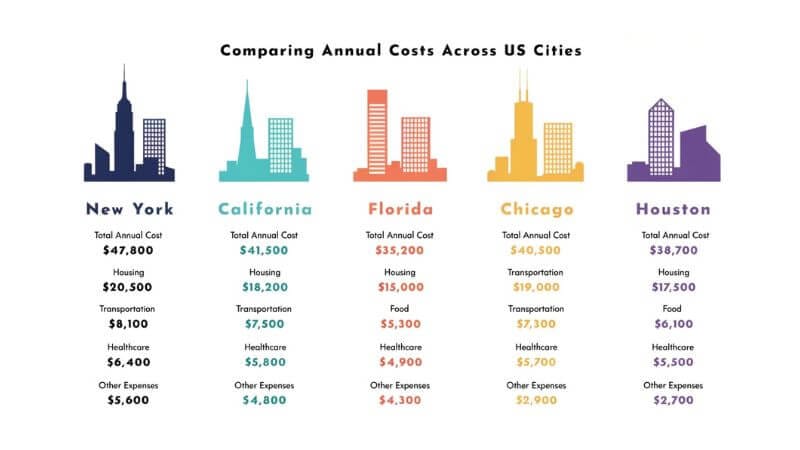
Frequently Asked Questions About Cheap Car Insurance
Q: What is the cheapest car insurance available in the USA in 2026?
A: The cheapest car insurance in the U.S. averages about $64 a month for minimum coverage, based on 2026 data. Drivers in Vermont often pay some of the lowest rates, around $125 a month for full coverage.
But the cheapest policy for you may be different. Your rate depends on factors such as your ZIP code, driving record, age, and the amount of coverage you want.
That is why comparing quotes matters. Try getting at least five quotes before choosing a policy. Prices can vary a lot, even for the same driver, and comparing can help you find your lowest real rate.
Q: How do I get cheap car insurance step by step in 2026?
A: Pull your current declarations page first. Then run five quotes — including at least one regional insurer — with identical coverage limits. Ask each insurer for every available discount before accepting. Check your credit score before quoting if your state allows credit-based pricing. Set your new policy start date before cancelling your old one. Repeat this process every 12 months at renewal. Most drivers save $400–$800 per year by following all seven steps.
Q: Is cheap car insurance worth it for drivers aged 18–45?
A: Cheap car insurance is worth it when the coverage matches your actual needs — not when it simply carries a low number. For drivers aged 18–45 with financed or leased vehicles, lenders typically require full coverage, which limits how low you can go. For drivers who own their cars outright, minimum coverage may work if the car’s value is under $6,000. The risk is real: a cheap policy with the wrong deductible can cost more per claim than the premium savings over two years.
Q: What is the cheapest car insurance in New York City?
A: New York City averages over $4,700 per year for car insurance in 2026 — making it the second most expensive city in the USA. iPullRank The cheapest available options typically come from NYCM Insurance, Allstate, and State Farm for NYC drivers. Pay-per-mile programs like Metromile may be the cheapest option for drivers who travel fewer than 5,000 miles per year. Always quote by exact ZIP code — rates vary by hundreds of dollars between neighbourhoods.
Q: How do I find cheap car insurance in California?
A: Cheap car insurance in California works differently from many other states. Insurance companies here cannot use your credit score or gender to help set your rate. Because of that, your ZIP code, driving history, and how much you drive matter more.
The average full coverage policy in California costs about $2,967 per year in 2026, but many drivers pay less when they compare quotes.
Rates can vary a lot between insurers, even for the same driver. That is why it helps to get quotes from at least four companies, including a smaller regional insurer.
If you drive under 7,500 miles a year, ask about a low-mileage discount. Many people miss this simple way to save.
Even moving to a nearby ZIP code can sometimes change your rate. That is why checking prices by exact ZIP code matters.
Simple strategy: compare quotes, ask about discounts, review rates at renewal, and use low mileage savings if you qualify.
Cheap car insurance is not just about finding the lowest price. It is about getting solid coverage for less.
Q: Is cheap car insurance in Florida different from other states?
A: Yes — Florida’s no-fault insurance laws require every driver to carry Personal Injury Protection (PIP). Florida averages $321 per month for full coverage in 2026 — the third highest in the country. WebFX To find cheap car insurance in Florida, set your PIP to the state minimum while keeping liability limits strong. Compare Travellers, State Farm, and GEICO — Travellers typically offers the lowest rates in Florida. Avoid insurers who bundle PIP with medical payments coverage by default — that adds cost you may not need.
Q: What are the biggest mistakes people make with cheap car insurance?
A: The four biggest mistakes people make with cheap car insurance are simple but costly. Some drivers choose a very high deductible just to get a lower monthly bill, but that can cost much more after an accident.
Another mistake is cancelling an old policy before the new one starts. Even a short gap in coverage can lead to higher rates later.
Some people remove uninsured motorist coverage to save a little each month, often only $10 to $20, but that can be a very expensive risk.
Another common mistake is keeping full coverage on an older low-value car out of habit, even when the extra premium may no longer be worth it.
Any one of these mistakes could cost far more than the money saved — sometimes hundreds or even thousands of dollars.
Before renewing, check two things: your deductible and your car’s current market value. That simple review can help you avoid overpaying or being underprotected.
Q: Does cheap car insurance in Chicago differ from that in Houston or other cities?
A: Yes — significantly. In Texas, full coverage costs about $53 more per month in Houston than in smaller cities like Corpus Christi. Svitla Systems Chicago rates are higher than most Illinois cities due to Cook County’s high traffic density and theft rates. The cheapest car insurance in Chicago often comes from regional carriers like Pekin Insurance or Erie Insurance — not just national brands. In Houston, telematics programs from Progressive and State Farm offer the largest discounts for safe drivers. Always compare city-specific regional carriers alongside national ones.
Conclusion
The bottom line about cheap car insurance is simpler than it looks.
The difference between what most drivers pay and what they could pay is not luck or location. It is a process. Drivers who follow a structured comparison approach — with exact coverage matching, discount auditing, and annual renewal checks — consistently pay less than drivers who auto-renew.
Here are the three things to do this week:
Pull your declarations page and write down your exact coverage limits and deductible amount.
Run five quotes using The Zebra or your state’s Department of Insurance comparison tool — with identical coverage to your current policy.
Ask for every discount before accepting any quote — bundling, safe driver, low mileage, and telematics discounts are the four most frequently missed.
Cheap car insurance does not mean low protection. It means paying a fair price for the protection you already have. Most drivers overpay by $400–$800 per year, not because their risk is high, but because they have not compared in the last 12 months.
Start with step one. It takes five minutes and costs nothing.
About the Author
Jahedul is a CFP®-certified financial writer with 11 years of experience covering personal finance, insurance, and consumer protection for readers across the USA, UK, and Canada. She specialises in translating complex insurance pricing systems into clear, actionable guidance for everyday drivers — without the industry jargon.
Disclaimer: This article is for general informational purposes only and should not be considered financial or insurance advice. Before making any insurance decisions, you should consult a licensed insurance agent or a qualified financial advisor.